-
We Don’t Need to Save the Planet
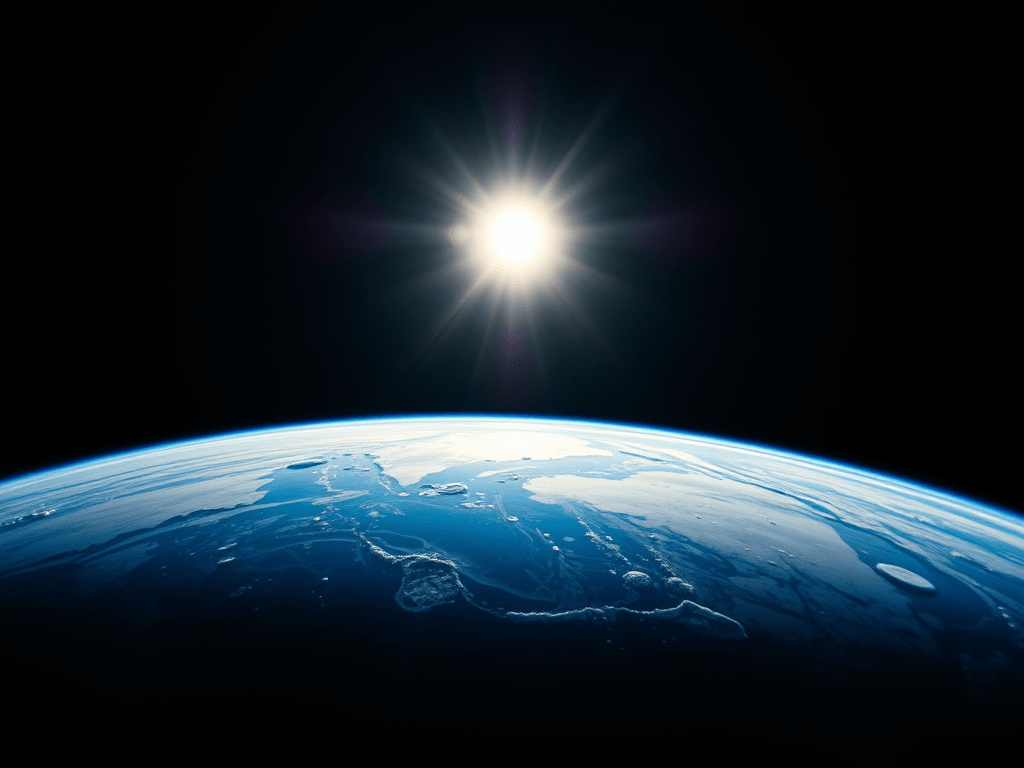
A reflection on humanity’s urgent responsibility to protect life as we know it.
“Save the planet!”—it’s a rallying cry we’ve all heard. But does the planet really need saving?
The Earth itself is a colossal, resilient ball of rock and metal, formed 4.5 billion years ago. Its 1,086 trillion cubic kilometers of mass includes an iron-nickel core, molten mantle, and a thin crust. And life? It clings to an astonishingly tiny fraction of that—our biosphere, which makes up just 0.0007% of the planet’s volume.
Even if humanity unleashed its worst, devastating ecosystems and causing irreversible damage, Earth would endure. It has survived asteroid impacts, super-volcanoes, and eons of cosmic turbulence. Regardless of our actions, it will continue orbiting around the Sun for another 7 billion to 8 billion years.
Life Is Resilient, But We’re at Risk
Life on Earth began about 4 billion years ago, but for most of that time, it consisted of single-celled organisms. Complex multicellular life—plants, animals, and ecosystems like the ones we rely on—only appeared around 600 million years ago. That’s just 15% of life’s history.
Since then, Earth has endured five mass extinctions, each wiping out 75% to 96% of species. After every catastrophe, life found a way to recover, but not without immense loss. Microbial life, in particular, appears to be ubiquitous and almost indestructible:
- Some bacteria can survive for years in the vacuum of outer space. Others live in polar deserts, survive high temperature and pressure, and even resist radiation.
- The human body hosts more bacteria cells (38 trillion) than human ones (30 trillion).
Even if humanity were to vanish, microbial life would likely persist. But our survival—and the survival of countless species we depend on—isn’t guaranteed.
Who Really Needs Saving?
What’s at stake isn’t the planet itself—it’s our own lives. The ecosystems we depend on for food, water, and air are fragile, and their collapse puts humanity’s future in jeopardy. The Earth will endure without us, but we cannot endure without the delicate balance of life that sustains us.
Let’s stop pretending we’re here to “save the planet.” The truth is, we need to save ourselves—and to do that, we must protect the ecosystems that sustain us.
As John Doerr outlines in Speed & Scale (and reinforces in his TED Talk) a clear plan to tackle the climate crisis and build a sustainable future:
- Electrify Transportation – Transition to clean, electric vehicles and renewable energy.
- Decarbonize the Grid – Shift away from fossil fuels to wind, solar, and other green energy sources.
- Fix Food – Reduce food waste and transform agricultural practices to be sustainable.
- Protect Nature – Safeguard forests, oceans, and biodiversity.
- Clean Up Industry – Innovate cleaner production processes for essential goods.
- Remove Carbon – Invest in technologies to capture and store CO₂.
The Way Forward
The challenges are immense, but so is the opportunity. By taking action, we’re not just preserving our species—we’re ensuring a livable future for generations to come.
The Earth doesn’t need us to survive. But we need the Earth, its ecosystems, and the delicate balance of life to thrive. Let’s move beyond slogans and focus on what truly matters: creating a sustainable world for all.
Here’s John Doerr on the TED stage:
-
An Intergenerational Turning Point

“We are the first generation to feel the impact of climate change and the last generation that can do something about it.”
Barack Obama
-
How to manage frustration by Michael Kaplan

Everything that causes you frustration can be brought into one of 3 buckets:
- A problem you have to solve
- A dilema you have to manage, you might not be able to solve it, you just have to make sure it doesn’t disrupt you
- A distraction you just need to avoid
When you’re feeling frustration, if you can figure out which bucket that thing is in, then you can very quickly figure out which action you need to take.
The full podcast with Michel Kaplan, Director, Agency Business Development at Google, can be found here:
Tag Cloud
business climate change fun great speakers leadership management marketing okrs online marketing optimization presentation tips quotes seo social media start ups sustainability testing web analytics
Archive
- November 2024
- October 2024
- August 2024
- December 2023
- November 2023
- October 2023
- February 2023
- August 2022
- April 2022
- February 2015
- February 2013
- January 2013
- October 2012
- July 2012
- April 2012
- January 2012
- December 2011
- November 2011
- October 2011
- September 2011
- August 2011
- July 2011
- June 2011
- May 2011
- April 2011
- March 2011
- February 2011
- January 2011
- December 2010
- October 2010
- August 2010
- April 2010
- February 2010
- January 2010
- December 2009
- November 2009
- October 2009

